How NDT companies price their work
Labs and field contractors use a handful of pricing models, often mixed in one quote.
- Hourly or day rate per technician, with a minimum charge of four hours or a full shift for field work
- Per shift rate for a crew, common in radiography where two qualified people must be present
- Per unit price: per weld, per joint, per film or exposure, per part, per foot of pipe or per turbine
- Per project price for a defined scope such as an annual infrared survey of a facility
- Add ons: mobilization and travel, per diem, overtime and weekend premiums, equipment rental, consumables, Level III review and report preparation
When you compare quotes, convert them to the same unit, for example total cost per accepted weld or per part, including mobilization and reporting.
The cost drivers that apply to every method
Some factors move the price no matter which method you choose.
- Access: scaffolding, rope access, confined space entry, height or an outage window
- Surface condition: paint or coating removal, grinding, cleaning
- Code and acceptance criteria: stricter codes need specific procedures and more documentation
- Personnel level: Level II technicians for interpretation, Level III for procedures and approvals
- Location and travel distance from the provider's base
- Report detail and data deliverables
- Turnaround and shift requirements, including nights and weekends
Typical NDT inspection cost by method
The table shows typical ranges in the US market. These are typical ranges, not quotes, and real prices depend on scope, region and provider.
| Method | Typical range, not a quote | Usual unit | What moves the price |
|---|---|---|---|
| Visual testing (VT, CWI) | $75 to $150 per hour | Hour, half day minimum | Certification level, travel, report |
| Liquid penetrant testing | $75 to $150 per hour | Hour or per part | Fluorescent vs visible, part count, prep |
| Magnetic particle inspection | $75 to $160 per hour | Hour or per part | Wet fluorescent vs dry, bench vs yoke |
| Ultrasonic thickness gauging | $80 to $160 per hour | Hour or per reading grid | Number of points, access, temperature |
| Ultrasonic weld testing, conventional | $90 to $180 per hour | Hour or per weld | Thickness, code, scan plan |
| Phased array UT or TOFD | $1,200 to $3,000 per day | Day per technician | Setup, encoded scans, data analysis |
| Radiography, field crew | $1,200 to $3,500 per shift | Shift per two person crew | Source type, exposures per shift, film vs digital |
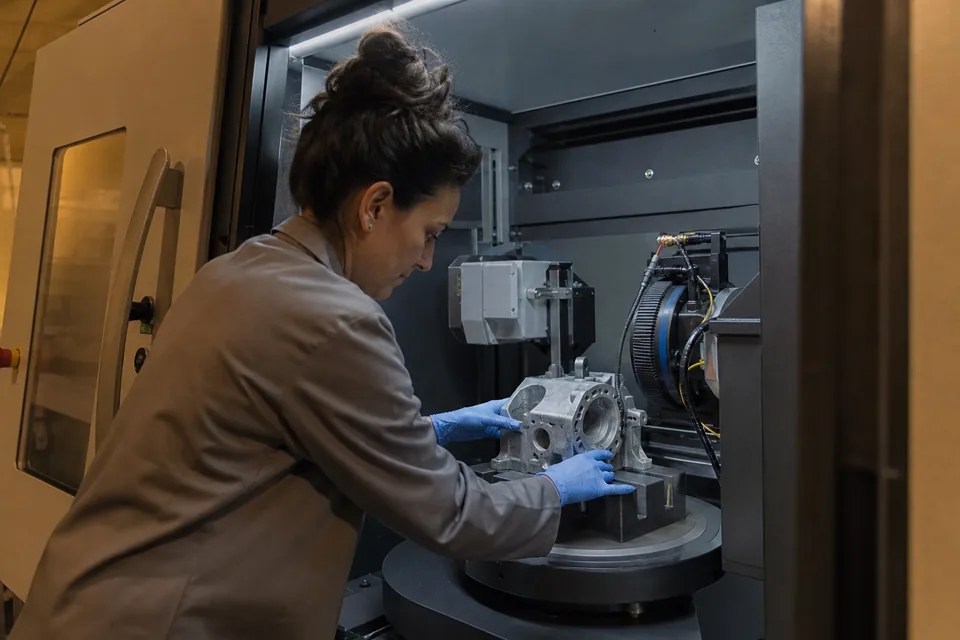
| Digital radiography of castings in lab | $25 to $150 per part | Part | Views per part, part size, grading |
| Eddy current, tubing | $1,000 to $3,000 per day | Day or per tube | Tube count, probe type, analysis |
| Infrared electrical survey | $600 to $2,000 per day | Day or per facility | Number of panels, report per finding |
| Industrial CT | $300 to $2,500 per part | Part or hour | Size, voxel, analysis, report |
| Drone inspection of a wind turbine | $500 to $1,500 per turbine | Turbine | Fleet size, blade imaging resolution, analysis |
For computed tomography the details are in industrial CT scanning cost.
Radiographic testing cost
Radiographic testing in the field is priced by the shift because radiation safety rules require at least two qualified people, a controlled area and often night work so other trades can stay on the job during the day. The number of exposures per shift depends on pipe diameter, wall thickness and source type. Digital radiography saves film and chemistry but the equipment cost shows up in the day rate. In a lab, radiography of castings is often priced per part or per view.
Ultrasonic testing cost
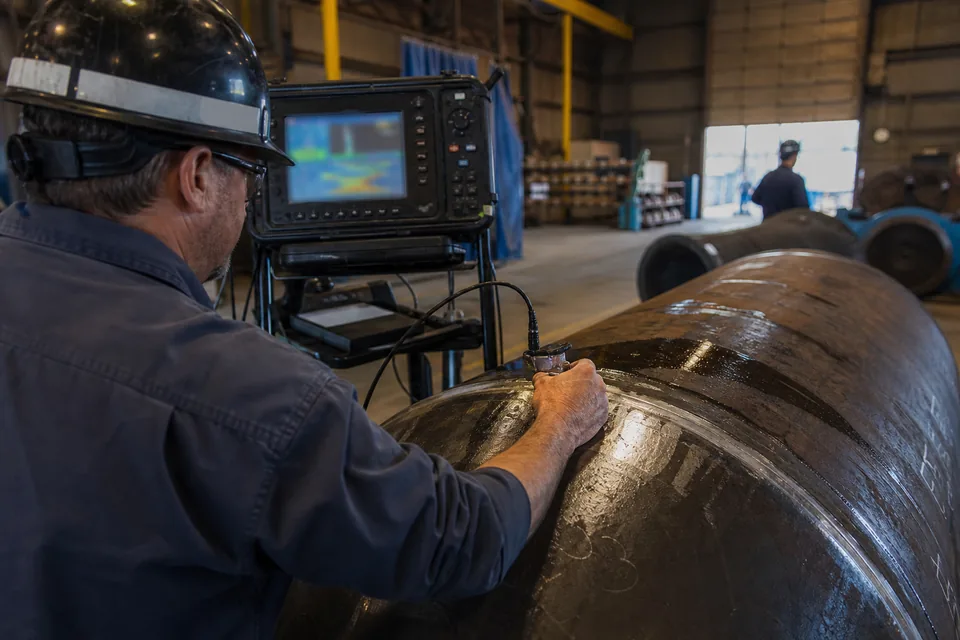
Conventional ultrasonic testing is usually billed by the hour. Phased array and TOFD carry higher day rates because of the equipment, encoded scanners, scan plans and the time to analyze recorded data. On the other hand PAUT has no radiation exclusion zone, so other work continues nearby, which can save money on the overall project. Thickness surveys are cheap per reading, but large grids on insulated or hot piping add access cost.
Magnetic particle and penetrant cost
Magnetic particle inspection and liquid penetrant testing are the cheapest methods per hour and per part. The cost driver is usually not the test but the preparation: removing paint, cleaning to the level the procedure demands and, for penetrant, the dwell and development times. Fluorescent methods need darkened conditions and UV lamps, which adds to field setup.
Thermography and drone cost
Infrared inspection of electrical systems is priced by the day or per facility. The real limit is the number of panels a thermographer can open safely under load in a day, which depends on your site's electrical safety rules and on whether a qualified electrician escorts the survey. Drone inspection is priced per asset, per day or per project; fleet size, data analysis depth and travel between sites move the number most.
How the numbers add up on real jobs
The scenarios below show how unit rates combine into a project total. All figures are typical ranges, not quotes.
- Structural steel fabrication with twenty complete joint penetration welds needing UT to AWS D1.1: one technician for one to two days, plus a report. Expect roughly $1,000 to $3,500 including mobilization within a normal service area.
- Pipe spool radiography for a process piping project, sixty welds on small bore pipe: one to three night shifts for a two person crew, plus film or digital processing and interpretation. Expect roughly $3,000 to $10,000.
- Annual infrared survey of a mid sized plant with about 150 electrical panels: one to three days of thermographer time with an escort, plus a report with an image and a recommendation for each finding. Expect roughly $1,500 to $5,000.
- Lab penetrant inspection of 500 small aluminum machined parts per month to ASTM E1417: per part pricing after a setup, often a few dollars per part at volume.
Lab work versus field work
The same method costs differently in a lab and on site. In a lab the equipment, darkroom or shielded booth and staff are already in place, so pricing is per part with a small setup or lot fee. In the field you pay for travel, the time it takes to set up a safe work area and every hour the crew waits for access. If your parts can travel, lab inspection usually costs less per part and delivers faster results. Installed equipment, large structures and anything under a code that requires inspection in place must be done in the field.
Certification level and accreditation
A Level II technician performs and interprets most work. Level III personnel write and approve procedures and resolve disputed indications, and their time is billed at a higher rate. Aerospace work done under NADCAP accreditation and lab work inside an ISO 17025 scope carry overhead for audits, calibration and documentation. That overhead is part of the price, and it is worth paying when your customer or code requires it. Do not ask for accreditations you do not need, because they narrow the field of providers and raise the price.
Hidden costs that show up after the quote
These items often appear on the invoice but not in the first quote. Ask about each of them in writing.
- Mobilization and demobilization, travel time and mileage
- Minimum charges for short visits
- Standby time when the work area is not ready or a permit is late
- Overtime, night shift and weekend premiums
- Surface preparation and post cleaning
- Repeat tests after repairs
- Level III review, written procedures and technique sheets for a new part
- Extra report copies, specific templates or data archiving
How to lower NDT inspection cost
The cheapest inspection is the one that answers the question on the first visit.
- Choose the method by defect type, not habit; types of non destructive testing explains the trade offs
- Prepare the work area: surfaces clean, insulation removed where agreed, permits ready
- Group inspections to fill full shifts and avoid repeated mobilization
- Provide drawings, weld maps and acceptance criteria with the request
- Ask for a unit price at your actual volume
- Agree on a standard report format before work starts
- Use screening methods first, such as drone surveys or thickness grids, then targeted detailed NDT where they find a problem
What to put in an NDT request for quote
Complete requests get faster and more comparable quotes.
- Part or asset, material, thickness and condition
- Method, or the defect you worry about if you are not sure of the method
- Quantity: welds, parts, feet of pipe, panels or turbines
- Location, access conditions, site safety requirements and work hours
- Code, specification and acceptance criteria
- Personnel qualifications and accreditations required
- Report format, deliverables and deadline