Typical 3D scanning cost by job type
These are budgeting allowances for US service bureau work, not quotes. Minimums vary, so a small job can fall below another shop's minimum. Compare the delivered result, not scan time alone.
| Job type | Typical planning range | Scope to confirm |
|---|---|---|
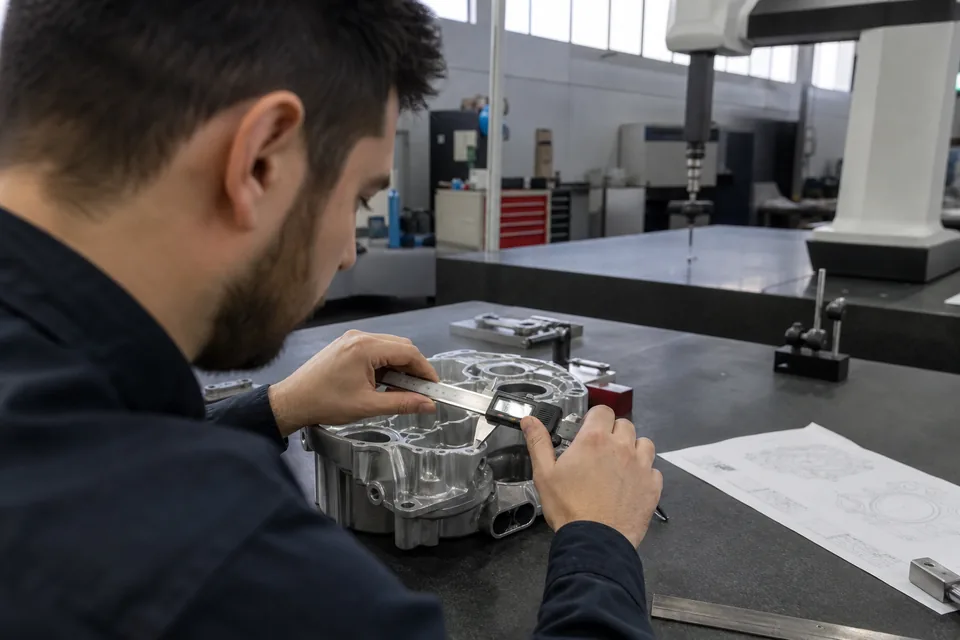
| Small part inspection color map | $300 to $1,200 per part | CAD alignment and deviation report |
| Full GD&T first article report on a mid size casting | $600 to $2,500 per part | Drawing coverage and any supplemental probing |
| Scan to mesh STL | $500 minimum, then $100 to $300 an hour | Setup and mesh cleanup may be additional |
| Scan to CAD surface model | Quote scan time plus surface fitting | Surface continuity and solid closure requirements |
| Parametric reverse engineering | $800 to $3,000 simple, up to $15,000 or more complex | Model structure, validation and revision allowance |
| Large part or on site scanning | $1,500 to $4,000 per day plus travel | Mobilization, access and processing |
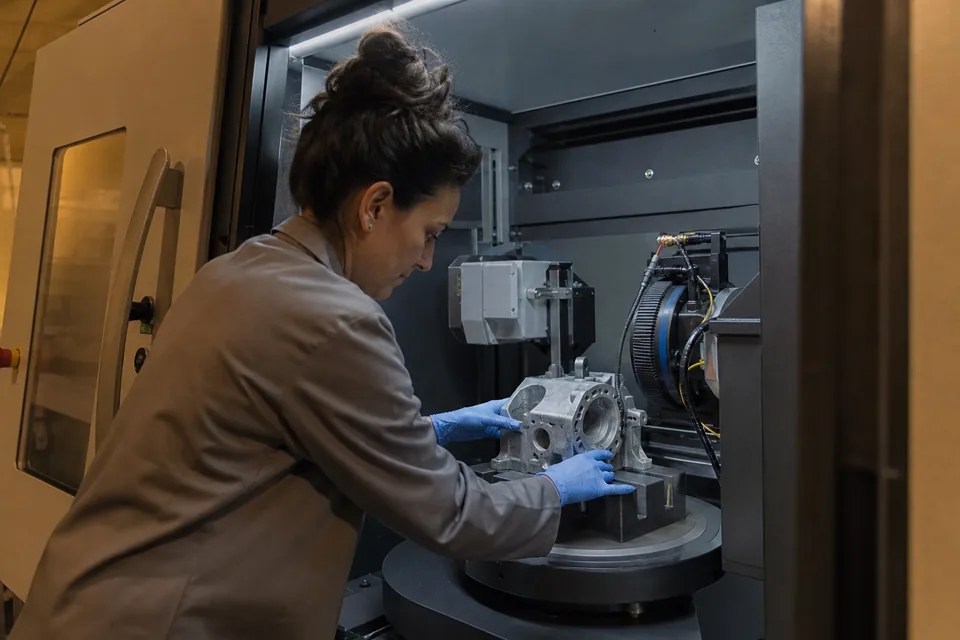
| CT for internal geometry | $300 to $900 simple, up to $6,000 dense | Analysis and CAD reconstruction priced separately |
CT overlaps optical scanning prices on simple jobs but needs a separate budget for internal metrology. The 3D scanning services page explains which surface methods suit your part and gives the underlying service price bands.
What drives a 3D scanning services price
- Size and access. Large parts need more positions and alignment work. Deep recesses may remain invisible to optical scanning.
- Feature detail and accuracy. Small features and tight tolerances need appropriate point spacing, verified uncertainty and sometimes CMM measurements.
- Surface finish. Shiny, transparent or black surfaces may need spray, preparation and cleanup. State restrictions before quoting.
- Deliverable type. Mesh cleanup, CAD reconstruction and reporting require different skills and separate labor.
- Quantity. Repeat lots spread fixture and program costs, but each part still needs identification and review.
- Inspection depth. A color map costs less than evaluating drawing characteristics with datum alignment and documented results.
- Turnaround. Rush work may require overtime or displace scheduled analysis.
- Location. Shipping a manageable part usually avoids travel and site induction costs. Installed equipment may justify mobilization.
Ask bidders to separate setup, acquisition, processing, modeling and reporting. A lower scanning rate can produce a higher total if analysis hours are excluded.
What you receive changes the engineering bill
An STL mesh records measured shape as triangles. Its cost includes registration, cleanup and any agreed hole filling. It does not contain editable features or recover nominal design intent from wear.
A NURBS surface model fits mathematical surfaces to the mesh. More time goes into patch boundaries, continuity and closing the model. Agree whether the goal is an as measured skin or geometry corrected toward nominal dimensions.
For parametric reverse engineering, the engineer reconstructs planes, cylinders, features and relationships. STEP can carry a solid but generally does not preserve the native feature history. If you need editable SolidWorks or NX features, specify native files, software version and STEP export separately. This distinction often explains a large scan to CAD cost difference.
A deviation color map adds alignment, tolerance bands and comparison against supplied CAD. A first article report, such as AS9102 Form 3, adds characteristic accountability, measured values and acceptance decisions. The shop must identify features that require another measurement method rather than imply that a surface scan covers every callout.
Use industrial CT scanning for inaccessible internal geometry. For other defect inspection needs, the NDT inspection cost guide helps budget alternative methods.
Illustrative quotes with the scope added up
These examples use assumed hours and charges to show quote arithmetic. They are illustrative budgets, not completed customer jobs or offers.
**Small bracket inspection.** CAD is available and the requirement is a datum aligned color map. Setup and scanning take two hours at $150, or $300. Comparison and reporting add $200, giving $500 total. A complete drawing report would require a different allowance.
**Legacy housing reconstruction.** Scanning takes two hours at $200, or $400. Parametric modeling takes six hours at an assumed $150, or $900. Model validation and the agreed revision allowance add $300, giving $1,600 total. Known nominal dimensions help the engineer avoid reproducing wear as design geometry.
**Installed tooling inspection.** A site day costs $2,500, travel is an assumed $400 and off site processing adds $600. The total is $3,500. The quote should state whether the day rate already includes processing so you do not count it twice.
Outsource or buy a scanner
Professional handheld scanners suitable for metrology commonly require roughly $15,000 to $60,000 or more in hardware spending. That is an equipment planning range, not an installed capability price. Owning the instrument still requires a competent operator and a controlled measurement process.
| Cost or decision | Outsourced service | Owning a scanner |
|---|---|---|
| Initial spending | Project charge and logistics | Hardware plus software and setup |
| Recurring cost | Per part, hourly or daily invoice | Software renewals, verification, maintenance and operator time |
| Engineering work | Agreed modeling or report scope | Training, CAD reconstruction and report preparation |
| Capacity | Depends on supplier availability | Depends on staff availability and equipment suitability |
| Best fit | Intermittent work or varied methods | Steady weekly volume on suitable parts |
Compare annual outsourced spending with annual ownership cost, including software, training, fixtures, operator time and a realistic equipment recovery period. For a workload threshold, divide annual fixed ownership costs by the outsourced price per comparable job minus internal labor and consumables per job. Keep fixed costs and job costs separate to avoid counting labor twice.
Buying can pay when weekly demand keeps trained staff productive and fast feedback changes production decisions. Outsourcing often wins for occasional parts, changing envelopes, demanding uncertainty requirements or scarce modeling skills. A scanner purchase does not remove the reverse engineering workload.
Charges to settle before work starts
- Spray and cleanup, including whether residue is acceptable on functional surfaces.
- Re-scans caused by inaccessible faces, movement, missing coverage or a changed scope. Agree who pays for provider errors versus buyer changes.
- Modeling revisions when nominal dimensions or design intent arrive after reconstruction begins.
- Shipping, return packaging, insurance, custom fixtures and handling of heavy parts.
- NDA review and restricted data handling. Agree confidentiality terms before transferring geometry, and ask whether special handling adds fees or lead time.
Confirm file retention and retrieval terms. Reusing an approved fixture or inspection program can save money on repeat orders only if it remains available.
How to lower the cost without losing useful data
Send current CAD and drawings for inspection so the shop can price alignment and reporting accurately. Mark critical features and acceptance tolerances instead of requesting every possible measurement. Keep complete drawing coverage when first article requirements demand it.
Batch similar parts to spread setup and shipping costs. Accept a mesh when visualization or downstream mesh processing is sufficient, rather than paying for parametric features nobody will edit. For reverse engineering, provide nominal dimensions, mating geometry and any available unworn sample. Agree deliverables and revision limits before acquisition starts.
What to send for comparable scanning quotes
- Part dimensions, weight, material, finish and photographs.
- Quantity now, repeat lot expectations and part identification requirements.
- Inspection or reverse engineering purpose, with CAD and drawing revision if available.
- Critical features, tolerances, datum alignment and required uncertainty evidence.
- Spray restrictions, inaccessible surfaces and handling constraints.
- Mesh, surface or parametric model requirements, native CAD version and report template.
- Shipping or site arrangements, deadline, NDA and revision allowance.
Ask each shop for included hours, exclusions and a total for the same scope. Once you approve a quote, raise the PO through your purchase order software so the agreed deliverables, price and revision terms stay attached to the order.
How much does it cost to 3D scan an object?
A small industrial part with CAD comparison typically costs $300 to $1,200 as a planning range. Mesh only work depends on setup and cleanup, with minimums often around $500. Size, finish, accuracy and deliverables matter more than the object label, so send dimensions and acceptance requirements with the request.
How much does 3D scanning cost per hour?
US service bureaus commonly budget about $100 to $300 per scanning hour, with project minimums often around $500. That rate may exclude CAD reconstruction, detailed reporting and travel. Ask whether setup and mesh cleanup are included, and compare total project prices for identical deliverables rather than hourly rates alone.
How much does it cost to reverse engineer a part?
Simple parametric reconstruction typically runs $800 to $3,000 per part, while complex parts or assemblies can reach $3,000 to $15,000 or more. These are planning ranges. Modeling may take two hours or more for each scanning hour, especially when wear, missing dimensions or editable native features require engineering judgment.
Is it cheaper to buy a 3D scanner or use a scanning service?
Outsourcing usually costs less for occasional jobs; buying can make sense with steady weekly demand. Professional metrology handheld hardware alone is roughly $15,000 to $60,000 or more. Compare annual service spending against hardware recovery, software, verification, training and operator time, including the modeling and reporting labor you would bring inside.