CUI inspection cost by method
These are planning ranges for carbon steel piping from 2 to 12 inch in US plants, built from how providers typically structure quotes. Real quotes move with access, insulation type, line temperature and whether the plant is running, so use the table to find gaps in a quote, not to replace one.
| Approach | Planning range | What moves it |
|---|---|---|
| Strip and visual plus UT | $60 to $200 per linear foot including reinsulation | Insulation type, jacketing, asbestos check, scaffold |
| Inspection windows or plugs at TMLs | $150 to $450 per window | Pipe size, access height, jacket type, sealing method |
| Real time radiography (profile) through insulation | $1,500 to $3,500 per crew day, 20 to 60 shots | Line size, access, safety exclusion zone |
| Guided wave screening | $3,000 to $8,000 per day per crew | Pipe length per access point, coating, supports and bends |
| Pulsed eddy current through insulation | $2,000 to $4,000 per day | Insulation thickness, wall thickness, calibration |
| Scaffold or lift access | $15 to $40 per square foot of scaffold, or lift rental by the day | Height, congestion, permits |
| Reporting and CUI risk ranking | $3,000 to $15,000 | Number of lines, drawing quality, remaining life calculation |
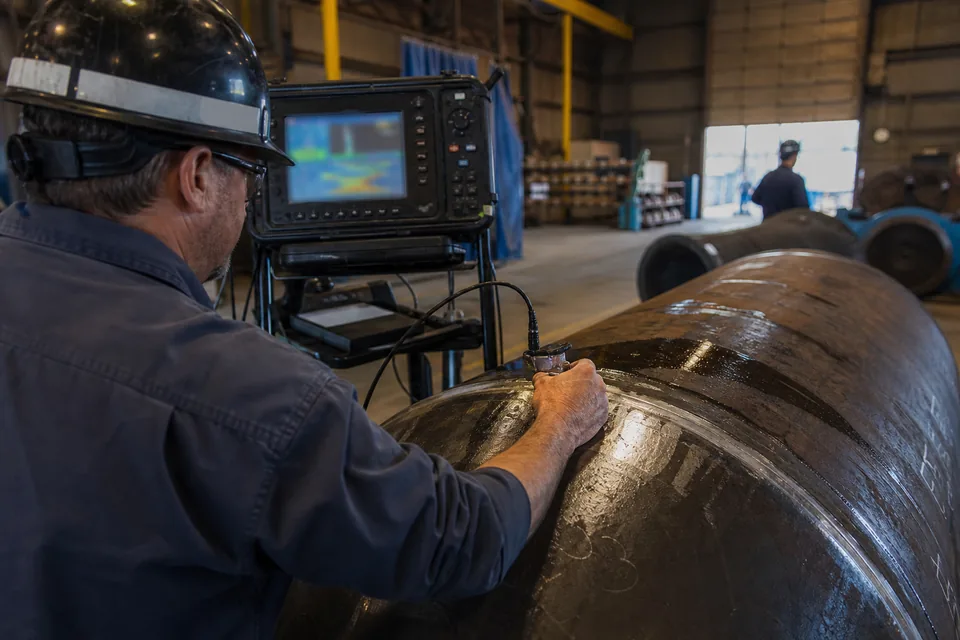
Screening methods exist to shrink the strip and inspect list. A screening result tells you where moisture or wall loss is likely, and the second step, a direct UT or radiographic reading on bare steel or through a window, confirms it.
Worked budget for a 1,200 ft insulated line
Take a 6 inch carbon steel line, 1,200 ft, insulated with mineral wool and aluminum jacketing, operating between 150 and 300 F, in a plant that is 28 years old with moisture history at supports and elbows. The reliability engineer wants a CUI baseline before the next turnaround.
- CUI risk ranking by line circuit: drawings review, temperature band, jacket condition walkdown. About $5,000.
- Guided wave screening, 2 days: about $9,000, to flag stretches that look like wall loss.
- 60 inspection windows at $300, targeted at supports, low points and jacket damage: about $18,000.
- UT thickness readings and corrosion mapping at the opened windows, 3 days at $1,800: about $5,400.
- Real time radiography on 20 suspect spots, 1 day: about $2,500.
- Scaffold and lift access for the elevated sections: about $10,000.
- Reinsulation, jacketing and sealing at the windows: about $6,000.
- Report with corrosion rate and remaining life, plus repair list: about $6,000.
That is roughly $62,000, or about $52 per foot. Now compare it with the strip everything option on the same line. At $100 per linear foot for strip, UT and reinsulation the total is $120,000 before scaffold, and it also removes good insulation that did not need to be touched. If the screening finds only two bad spans, the targeted program could drop below $45,000. If it finds wet insulation along most of the line, expect the budget to move toward the full strip, and you have spent about $14,000 to learn that.
What moves a CUI inspection quote
Insulation access is the first driver. Mineral wool under aluminum jacket opens quickly, but calcium silicate, cellular glass and foam with metal cladding take longer, and any insulation that might contain asbestos needs testing, abatement or a separate contractor before anyone cuts. Ask who supplies the removal crew and who signs off on the material.
Temperature is second. CUI is most active between roughly 10 F and 350 F on carbon steel, so lines in that band get priority, and lines that cycle through the range, or that run cold and sweat, are the worst. A line that runs at 500 F, stays dry and is stainless mostly needs another method. Quotes that ignore the temperature band usually inspect the wrong lines.
Third is access. Elevated rack piping needs scaffolding or lift time that can match the whole inspection labor, and running plants add hot work, confined space and exclusion zone controls for radiography. The ultrasonic testing cost guide shows hourly ranges for the readings themselves, and the thickness readings are covered on our ultrasonic thickness testing services page.
Fourth is the code frame. API 570 requires CUI inspection programs for susceptible piping, and API 510 does the same for vessels. API RP 583 describes risk based CUI management, which is the basis for the targeted approach above, and API 570 piping inspections usually carry the cost of this work. Read the API 570 program overview before you ask for quotes.
What to send for comparable CUI inspection quotes
- Line list with size, material, length, operating temperature range and service.
- Insulation and jacket type, age, and any known asbestos or fire proofing.
- Prior CUI findings, repair history and moisture ingress points.
- Access type for each line, scaffold needed, and who builds it.
- Whether the line is running, shut down or can be opened in stages.
- Screening method wanted, or whether the provider should propose one.
- Deliverables, such as marked up drawings, thickness data, corrosion rate and remaining life.
- Who removes and reinstalls insulation, and who tests it for asbestos.
How much does corrosion under insulation inspection cost?
Plan on about $50 to $100 per linear foot for a targeted program with screening, windows, readings and reinsulation, and about $60 to $200 per foot when you strip and inspect. Access and abatement can double the figure, so the line list and a risk ranking decide the real number.
What is the best way to inspect for corrosion under insulation?
There is no single best method. Risk ranking picks the lines, screening such as guided wave or pulsed eddy current narrows the spots, and direct UT or profile radiography confirms wall loss. Stripping everything is accurate but costs the most and often removes insulation that was fine.
Can you inspect for CUI without removing insulation?
You can screen without removing it. Profile radiography shows wall thickness through insulation, pulsed eddy current estimates average wall loss, and guided wave finds changes over long stretches. A direct reading on bare steel is still the gold standard for sizing a finding, so expect windows at confirmed spots.
How often should CUI inspection be done?
Under API 570 and API 510 the interval comes from the risk ranking and the remaining life, so a susceptible line in a wet climate may be inspected every few years while a dry, low risk line can wait longer. Many owners tie the program to turnaround cycles to share access cost.
Who pays for reinsulation after CUI inspection?
The plant owner pays, as it is part of the access work. Some inspection quotes include removal and reinstall by the contractor, others price only the readings and leave insulation to a separate crew. Ask for it as a separate line so quotes compare on the same scope.