Pipeline metal loss inspection services for piggable and unpiggable lines
Pipeline metal loss inspection finds wall thinning from internal and external corrosion before it becomes a leak. On a piggable line the standard answer is an inline inspection run with a magnetic flux leakage (MFL) tool or an ultrasonic inline inspection tool, followed by excavations to verify the worst features. On a line that cannot take a pig, operators use external UT corrosion mapping, guided wave screening or robotic crawlers. Describe the line once and the request goes to inspection companies that run the tool class you need.
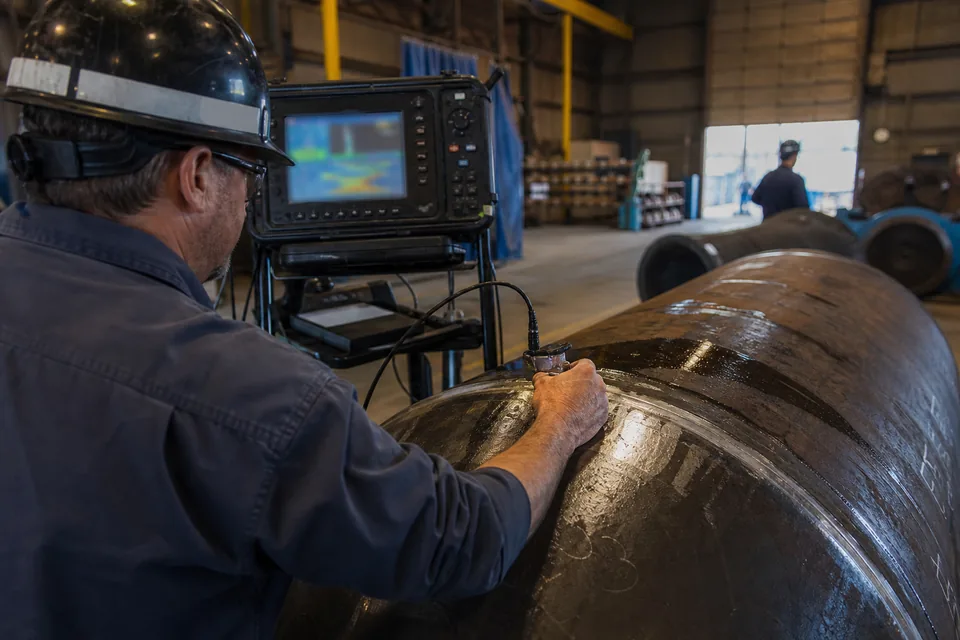
Pipeline metal loss inspection methods compared
| Method | Best for | What it reports | Main limit |
|---|---|---|---|
| MFL inline inspection | Gas and liquid lines with pig traps, long runs | Metal loss depth, length and width, clusters, internal versus external | Sizing accuracy drops on very thick wall and in slow, low flow runs |
| Ultrasonic inline inspection (UT ILI) | Liquid lines, thick wall, crack and wall thickness questions | Direct wall thickness readings and metal loss sizing | Needs a liquid coupling medium, so gas lines need a batch of liquid |
| Caliper and geometry tool | Before any high resolution run | Dents, ovality, restrictions | Does not size corrosion, it proves the line can take a metal loss tool |
| Robotic crawler or tethered tool | Unpiggable lines, plant and terminal piping | Wall thickness or MFL data from a single access point | Short range, slower, and the line has to be emptied or controlled |
| External UT corrosion mapping | Known suspect spots, road and river crossings, risers, tank manifolds | Wall thickness grid with a C scan or color map | Covers feet, not miles, and needs the coating removed |
| Guided wave screening | Cased crossings, buried or insulated pipe with limited access | Locations where the wall changes, which you then verify with UT | A screening result, not a depth measurement |
Ranges, accuracy and tool availability depend on diameter, wall, product and line condition, so treat the table as a way to shortlist methods before you request quotes. For how the tool classes work in detail, see our pipeline inspection guide.
Why operators run metal loss inspection
Most US operators of regulated gas and hazardous liquid pipelines run a written integrity management program. PHMSA's gas transmission rules in 49 CFR Part 192 Subpart O and the hazardous liquid rule at 49 CFR 195.452 require operators to assess pipeline segments that could affect high consequence areas, and inline inspection is one of the permitted assessment methods. The industry standard for the tool side is API 1163 on inline inspection systems. Intrastate and unregulated lines, gathering lines and plant piping often follow the same logic for insurance, lender or acquisition reasons.
Who buys pipeline metal loss inspection services
- Gas and liquid transmission operators with a baseline or reassessment due on a segment in or near a high consequence area.
- Gathering and midstream companies that need a first metal loss run on a line that has never been pigged.
- Terminal and refinery reliability engineers with unpiggable crude, product and water lines.
- Buyers of an asset in an acquisition who need a condition baseline before they close.
- Municipal and industrial owners of force mains, cooling water and fire water lines with corrosion history.
Each of them ends up with the same question: which tool class fits this line, and what will the whole program cost including cleaning and digs.
How a metal loss inspection job runs
- You send the line data: diameter, wall thickness, length, product, pressure, flow rate, launcher and receiver details, bends, valves and known restrictions.
- The provider reviews piggability, usually with a cleaning run and a gauging or caliper run first.
- The metal loss tool runs at a controlled speed, and the data is downloaded at the receiver the same day.
- Analysts size and classify every anomaly, rank them against ASME B31G or a similar assessment method, and issue a report, commonly in 30 to 90 days.
- You pick the excavation sites, the provider's field crew verifies depth with UT or laser scan, and the results calibrate the next run.
What drives the price of a metal loss inspection
- Diameter and length. Larger tools cost more to mobilize, and long runs need batteries and odometer wheels sized for the distance.
- Tool class. MFL is usually the lower cost option for a baseline, and UT ILI costs more because of the liquid medium and the data volume.
- Line preparation. Cleaning runs, launcher and receiver modifications and temporary traps are often a large part of the first run.
- Flow and speed control. A line that runs too fast or too slow may need bypass or flow control.
- Verification digs. Excavation, coating repair and recoating are frequently the biggest line of the budget.
- Reporting depth. Preliminary lists, final reports and integrity assessments are priced differently.
For worked numbers on a full program, see our inline inspection pipeline cost breakdown. If the line is steel piping inside a plant, the piping inspection services page covers the API 570 route.
What to put in your metal loss inspection request for quote
- 01Diameter, nominal wall, grade, length and the year built.
- 02Product, operating pressure, flow rate range and temperature.
- 03Launcher and receiver sizes, valve types and any known reductions, wyes or tight bends.
- 04Previous inline inspection data and the date of the last run, if any.
- 05Whether the line is in a high consequence area and the assessment deadline.
- 06Required threats: metal loss only, or also dents, cracks and mechanical damage.
- 07Support needed: cleaning, gauging, field verification, reporting format and integrity assessment.
- 08Schedule windows and any shutdown or product constraints.
How to choose a pipeline inspection provider
Ask which tool classes the company operates itself and which it subcontracts, and request recent sizing accuracy statistics from verification digs on lines of your diameter. Confirm that analysts follow API 1163 qualification practices and that the report lists tool tolerances and probability of detection. Ask who handles the pig trap work, the cleaning program and the field crew, because three parties on one run is where schedules slip. For unpiggable lines, ask for a reference on the same access type and the longest segment inspected from one access point.
FAQ
What is metal loss inspection on a pipeline?
It is a measurement of wall thinning caused by corrosion or erosion, reported as depth, length and width of each anomaly. Operators run it with inline tools such as MFL and ultrasonic tools, or externally with UT mapping, and use the results to decide which spots to dig, repair or monitor.
What is the difference between MFL and ultrasonic inline inspection?
MFL magnetizes the wall and infers metal loss from the leaked field, works in gas or liquid and suits long baseline runs. Ultrasonic inline inspection measures wall thickness directly with sound but needs a liquid coupling medium. UT ILI tends to size thick wall and cracks better, while MFL is usually cheaper per mile.
Can you inspect a pipeline for metal loss without a pig?
Yes. Robotic crawlers, tethered tools and external UT corrosion mapping cover lines that cannot take a pig. Guided wave testing screens long stretches from one location and points to spots that need UT verification. These methods cover feet or hundreds of feet, not miles, so they suit risers, crossings and plant lines.
How often does metal loss inspection have to be repeated?
For regulated gas transmission segments in high consequence areas, 49 CFR 192 Subpart O sets a maximum reassessment interval, up to seven years for most segments and shorter when anomalies need action. Hazardous liquid lines follow 49 CFR 195.452. Many operators run on a shorter cycle when growth rates are high.
What does a pipeline inline inspection cost?
Cost depends on diameter, length, tool class and how much cleaning and excavation the line needs. Mobilization and report minimums mean short lines cost more per mile. Our inline inspection cost article walks through a worked program with cleaning, gauging, the MFL run and verification digs.
Get matched with pipeline metal loss inspection companies
Describe the line in the inspection method advisor, with diameter, wall, product, length and access. It builds a complete request for quote and sends it to NDT companies and pipeline inspection providers that cover your region. You compare quotes on the same scope instead of repeating the line data to each company. Browse all methods on the NDT companies page, or compare screening options on the ultrasonic testing services page.
- 01What needs inspecting
- ...
- 02Material
- ...
- 04Concern
- ...
Run a pipeline inspection company? List your company
Show your inline inspection tools, robotic crawlers, UT mapping crews and the regions you cover, and receive matched pipeline metal loss RFQs. Learn more for providers. If you also want to get your services in front of buyers who search outside our marketplace, a specialist marketing agency can help with that side.