API 653 inspection prices by scope
Ranges for US NDT and tank inspection crews, for budgeting before you request quotes.
| Scope | Typical US price | What moves it |
|---|---|---|
| Formal external inspection by an API 653 inspector | $1,500 to $6,000 per tank | Tank size, height, scaffold or lift, insulation |
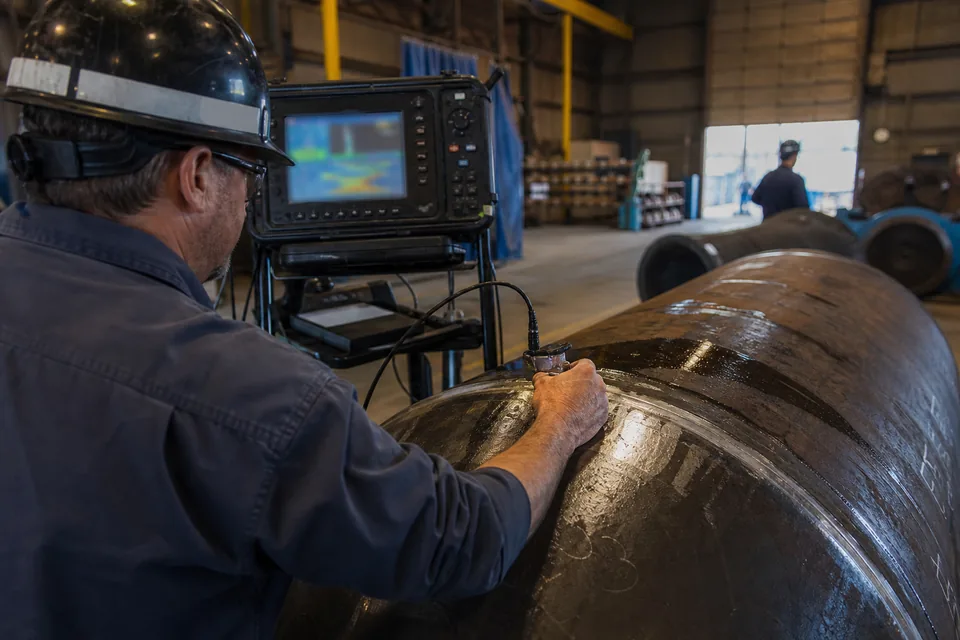
| Ultrasonic shell thickness readings | $5 to $25 per reading, or $1,200 to $3,500 per day | Grid size, coating, insulation removal |
| Internal inspection, visual and vacuum box on floor welds | $3,000 to $12,000 per tank | Floor condition, sludge left, ventilation |
| Floor scan, magnetic flux leakage or similar | $1 to $4 per square foot | Coating or lining, scan resolution, plate lap welds |
| Floor scan, ultrasonic corrosion mapping | $3 to $10 per square foot | Spot checks vs full coverage |
| Roof, nozzle and settlement survey | $1,000 to $5,000 per tank | Floating roof, number of nozzles |
| Tank cleaning and sludge removal | $8,000 to $100,000 or more | Product, sludge volume, waste disposal |
| Report with remaining life and next interval | $2,000 to $8,000 | Repair recommendations, drawings |
| Mobilization and travel | $500 to $3,000 per trip | Distance, remote sites |
For how crews price the underlying methods see NDT inspection cost, and for the service itself use our storage tank inspection services page.
What API 653 requires and why the interval drives your budget
API 653 covers inspection, repair, alteration and reconstruction of aboveground steel storage tanks built to API 650. It sets how often the tank is looked at and by whom. Routine in service checks by the owner are frequent, and a formal external inspection by an authorized inspector must happen at least every five years or at one quarter of the remaining shell life, whichever is shorter. Internal inspections follow corrosion rates and the remaining floor thickness, with a maximum interval of 20 years, and shorter if the floor is thinning. That means an owner with a known low corrosion rate and a good record can budget one internal every ten to twenty years, while a tank with a fast floor corrosion rate comes back every few years. The standard is published by the American Petroleum Institute, and your inspector sets the interval for each tank.
A worked budget for one 80 foot diameter tank
Take a crude or diesel tank with an 80 foot diameter and a 40 foot shell, taken out of service for an internal inspection. The floor area is about 5,000 square feet.
- Cleaning and sludge removal. $20,000 to $40,000 for a clean product tank, and far more for heavy sludge. This is the biggest swing.
- Floor scan at $2 to $4 per square foot. $10,000 to $20,000 for full coverage, or $5,000 to $10,000 at the low end of the band.
- Visual inspection and vacuum box testing of floor welds. $3,000 to $6,000.
- Shell ultrasonic thickness readings, 200 points at $10. $2,000.
- Roof and nozzle survey. $1,500 to $3,000.
- Report with remaining life calculation. $3,000 to $6,000.
That gives roughly $40,000 to $75,000 with a standard cleaning, and about $25,000 to $35,000 when the tank is already clean and the floor scan is the low band. These are illustrations, not offers. Repairs found during the inspection, such as patch plates or a floor overlay, are billed separately and can exceed the inspection cost.
In service inspection to avoid cleaning and downtime
Some owners use in service methods to push the internal date. A robotic crawler or an underwater tank floor scan can read the floor without emptying the tank, and external ultrasonic work reads the shell while the tank stays full. Costs are higher per square foot than a dry floor scan, but they skip cleaning, product transfer and lost storage. They suit tanks where the product is valuable or storage is tight. Many jurisdictions and insurers still require an internal look at some point, so ask the authorized inspector which method counts toward the next interval.
What moves an API 653 quote
Four things drive most of the spread. Tank size, because floor area grows with the square of the diameter. Condition of the floor and coating, since lined floors need a different scan method and sometimes lining removal. Cleaning, since sludge volume and disposal can exceed all the inspection work. And access, including scaffolding, lifts and permits for confined space entry. Pin all four down in the request and quotes line up. For a related price breakdown on pressure equipment see pressure vessel inspection cost.
What to send for comparable tank inspection quotes
- Tank number, diameter, height, year built, roof type, product and design code.
- Last inspection date and report, with the floor thickness and corrosion rate.
- Scope. External only, or internal with floor scan, shell readings and settlement.
- Floor condition, coating or lining, and whether the tank will be cleaned by you or the crew.
- Required deliverables, including remaining life and the next inspection interval.
- Authorized inspector requirements for the report.
- Dates, shutdown window, permits and safety rules.
How much does an API 653 inspection cost?
An external API 653 inspection typically costs $1,500 to $6,000 per tank in the US. An internal inspection with a floor scan usually runs $12,000 to $45,000, and cleaning and repairs are extra. Large tanks, heavy sludge and difficult access push the price higher.
How often is an API 653 inspection required?
A formal external inspection is required at least every five years, or sooner based on shell life. Internal inspections follow the corrosion rate and floor thickness, with a maximum of 20 years. The authorized inspector sets the interval for each tank.
What is included in an API 653 inspection?
An external inspection covers the shell, roof, nozzles, foundation and ultrasonic thickness readings. An internal inspection adds a floor scan, weld checks and a bottom plate review. The inspector issues a report with the remaining life and the next interval.
Do I have to empty the tank for an API 653 inspection?
For an internal inspection, normally yes, unless you use in service methods such as a robotic crawler. External inspections can be done with the tank in service. Ask the authorized inspector which method the interval allows.
Who can perform an API 653 inspection?
An API 653 authorized inspector, usually certified through API, must lead the inspection and sign the report. NDT crews can do the thickness readings and floor scans under that inspector. Confirm the certification and a recent sample report.