Hydrostatic testing services for pipelines and pressure vessels
Hydrostatic testing services fill a pipeline, piping system or pressure vessel with water, raise it to a code test pressure, hold it and check for leaks and pressure loss. It is the acceptance test for new construction and the proof test after a repair or alteration. In the US a hydro test on a single vessel or piping system typically costs $2,500 to $15,000 all in, and a pipeline segment is priced per mile or per section. Describe the job below and we send one request for quote to test crews that cover your state.
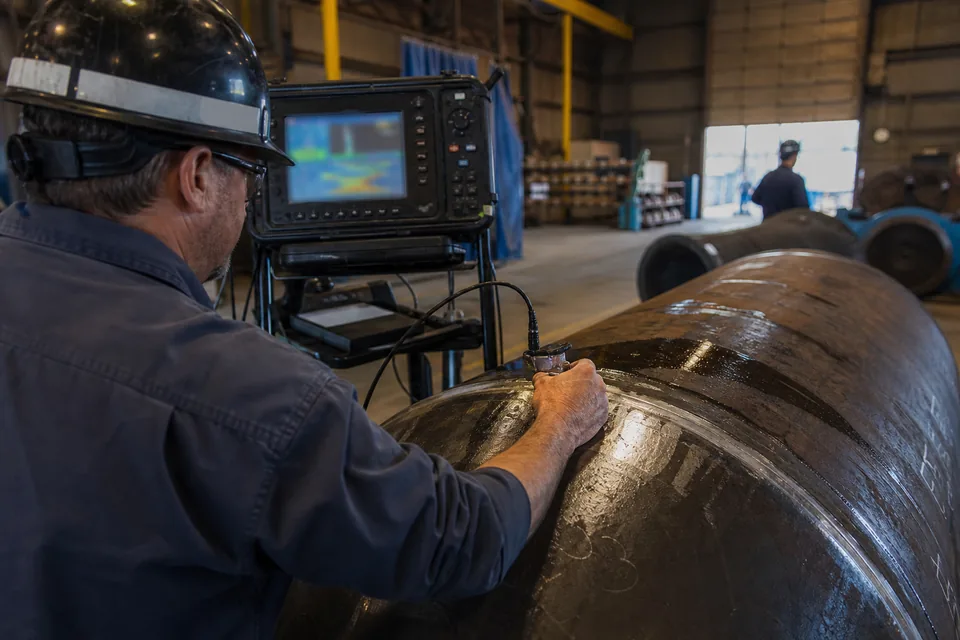
What a hydrostatic test covers and what it costs
| Job | What the test proves | Typical US range |
|---|---|---|
| Process piping system after fabrication | Joints hold at test pressure, no leaks at flanges and welds | $2,500 to $9,000 per system |
| Pressure vessel or exchanger after repair or alteration | Repair welds and shell hold at the code test pressure | $3,000 to $15,000 per vessel |
| Boiler and heat exchanger tube side or shell side | Tube leaks, tube sheet and gasket joints | $2,000 to $8,000 per bundle |
| Cross country pipeline segment | Strength test and leak test before commissioning | Priced per mile or section, from about $15,000 |
| Storage tank water fill | Shell and floor leak check, foundation settlement watch | $4,000 to $20,000 per tank including water handling |
| Hydrotest of an existing line after a repair | Repair section holds, line returns to service | $1,500 to $6,000 per section |
| Test pump and recorder on a day rate | Pressure chart, calibrated gauges, certified record | $1,200 to $3,500 per crew day |
These are planning ranges, not quotes. Water source, fill and drain volume, disposal, access and the test pressure change the price more than the equipment. For the NDT that often accompanies a hydro see pressure vessel inspection services.
Why owners buy a hydrostatic test
Water is nearly incompressible, so a failure at test pressure releases little energy compared with a gas test. That is why codes prefer it as the strength and leak test for new and repaired pressure equipment. A hydro also finds what NDT can miss, such as a leak through a gasket joint, a pinhole in a tube or a weld that looked clean on the surface. Typical requirements are 1.5 times design pressure for ASME B31.3 process piping and a code defined multiple of the maximum allowable working pressure for vessels under ASME Section VIII, set by the edition and the equipment. Liquid pipelines follow the pressure test rules in 49 CFR Part 195, Subpart E, and gas pipelines follow Part 192, Subpart J. Your design code, the jurisdiction and the owner specification set the exact pressure and hold time.
Who buys hydrostatic testing services
Pipe fabricators and mechanical contractors buy hydro tests to release piping systems before turnover. Refinery, chemical and power plant reliability engineers buy them after a repair, a rerate or a tube bundle retube. Pipeline operators buy segment tests before commissioning and after relocations. Owners of old vessels and tanks buy them when records are missing or a jurisdiction requires a periodic proof test. Each of them sends the same request for quote to qualified crews, which is the step we automate. Related work is on our piping inspection services, heat exchanger inspection services and pipeline inspection pages.
When a hydro test is not enough, and when NDT replaces it
A hydro proves strength and tightness at one pressure on one day. It does not size corrosion, find a tight crack that stays closed under load or tell you the remaining life. For in service equipment, owners usually pair a hydro after a repair with NDT before it, such as ultrasonic thickness readings or pipe weld testing. Some codes allow a pneumatic test or NDT in place of a hydro when water cannot be used, for example on a refractory lined vessel or a line that cannot drain, but those cases carry stricter safety rules and need an engineer's sign off. Ask the engineer of record which one your code accepts before you request bids.
How a hydrostatic test job runs
- You send the test boundary, design pressure, test pressure, hold time, water quality limits and the governing code.
- The crew proposes the test plan: blinds and isolation, fill and vent points, pump and gauge setup, relief protection and exclusion zone.
- The system is filled and vented, pressure is raised in steps, held for the specified time and inspected for leaks and pressure loss.
- Pressure is released, the system is drained, dried or preserved if required, and blinds are removed.
- You receive the test record with calibrated gauge IDs, pressure chart, hold time, test medium and the witness signatures.
What drives the price of hydrostatic testing services
- Water. Source, quantity, treatment (for example chlorine or inhibitor limits on stainless) and disposal can match the crew cost on a large system.
- Isolation. Blinds, test flanges and temporary supports take more time than the pressure part.
- Test pressure and hold time. Higher pressure needs a larger pump, rated hose and a larger exclusion zone.
- Access and weather. Freezing weather needs heat or additives, and remote sites need mobilization of $500 to $3,000 per trip.
- Witnessing. An inspector or owner representative on site may add standby time.
- Reporting. A certified test record with gauge calibration certificates is normal and should be in the quote.
Minimums apply, so a small piping spool often costs close to a half day. The NDT inspection cost guide shows how crews price the inspection methods that run alongside a hydro.
What to put in your hydrostatic testing request for quote
- 01Test boundary on a marked up P&ID or isometric, with volume in gallons if known.
- 02Design pressure, test pressure and hold time, plus the code or owner specification.
- 03Material of construction, especially stainless steel where water chemistry is limited.
- 04Water source on site, allowed quality and where discharge is permitted.
- 05Whether blinds, test flanges and vents are supplied by you or the crew.
- 06Witness and hold point requirements.
- 07Deliverables, such as the test record and calibrated gauge certificates.
- 08Site dates, shifts, permit and safety rules.
How to choose a hydrostatic testing company
Ask for a written test procedure with relief protection and an exclusion zone, not only a pump and a hose. Check that gauges and recorders carry current calibration certificates and that the quoted range puts your test pressure in the middle third of the dial. Ask who handles water treatment and disposal, and what the crew does if the system does not hold. For pipeline work confirm experience with the code that applies to your line.
FAQ
How much do hydrostatic testing services cost?
A hydro test on one pressure vessel or piping system typically costs $2,500 to $15,000 in the US, depending on water handling, isolation and test pressure. A crew day with pump and recorder runs $1,200 to $3,500. Pipeline segments are priced per mile or section.
What pressure is used for a hydrostatic test?
It follows the design code. ASME B31.3 process piping is normally tested at 1.5 times design pressure, and vessels follow the multiple of MAWP set by the ASME Section VIII edition. Pipelines follow 49 CFR Part 195 or 192. Your engineer of record sets the final number.
How long is a hydrostatic test held?
The hold time comes from the code and the owner specification. Many piping tests hold for at least 10 minutes at test pressure before the leak inspection, and pipeline strength tests run for hours. Read the project specification, since the number in the quote must match it.
Can I use air instead of water?
Sometimes, but a pneumatic test stores far more energy and needs stricter safety controls and an engineer's approval. Codes allow it when water would damage the equipment or cannot be drained. Most owners use water whenever the system allows it.
Do I need NDT as well as a hydrostatic test?
Often yes. The code or owner specification may require NDT of welds before the hydro, and a hydro does not measure corrosion or remaining life. Ask what your specification requires before you scope the job.
Get matched with hydrostatic testing companies
Describe the job in the inspection method advisor, with the test boundary, pressure and the governing code. It builds a complete request for quote and sends it to NDT and test companies that cover your state. You compare quotes on the same scope instead of repeating the job description to each vendor.
- 01What needs inspecting
- ...
- 02Material
- ...
- 04Concern
- ...
Run a company that performs hydrostatic testing? List your company
Show your pumps, recorders, certified technicians and the states you cover, and receive matched hydrotest and pressure test RFQs. Learn more for providers.