Heat exchanger inspection services for tube bundles and shells
Heat exchanger inspection services test the tubes, tubesheet, shell and welds of a shell and tube, air cooled or plate unit so you know whether to retube, plug or keep running. Eddy current testing screens non ferrous and some ferrous tube bundles for pitting and wall loss, IRIS (internal rotary inspection system) measures thicker carbon steel tubes, and UT, borescope and MT cover the shell, nozzles and tubesheet welds. In the US a tube bundle inspection typically costs $1,500 to $9,000 per exchanger, plus pulling the bundle, cleaning and scaffolding.
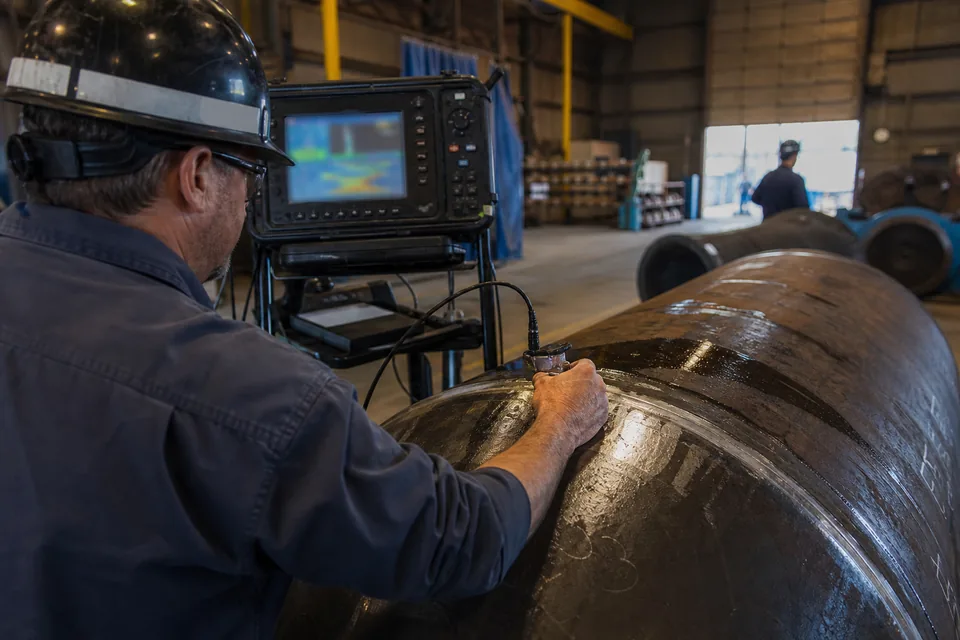
Which method inspects which heat exchanger part
| Heat exchanger part | Method | What it finds | Typical US range per exchanger |
|---|---|---|---|
| Non ferrous tubes (copper nickel, titanium, brass) | Eddy current (ECT) | Pitting, wall loss, cracks, fretting at baffles | $1,500 to $6,000 |
| Carbon steel and low alloy tubes | IRIS, remote field ECT | Wall loss, corrosion, erosion at inlet ends | $2,000 to $9,000 |
| Ferritic tubes and fin fan tubes | Near field or remote field ECT, IRIS | Internal pitting, thinning under fins | $1,800 to $8,000 |
| Shell and channel | UT thickness, visual | Wall loss, corrosion under insulation | $600 to $3,000 |
| Tubesheet and tube to tubesheet welds | PT, MT, borescope | Cracks at welds, crevice corrosion | $500 to $2,500 |
| Nozzles and shell welds | MT, PAUT | Cracks, fatigue damage | $800 to $4,000 |
| Tube leaks | Pressure test, helium or air test | Leaking tube location | $500 to $3,000 |
These are planning ranges, not quotes. Tube count, tube length, material and whether the bundle is pulled change the real price.
Which exchangers need which testing
Shell and tube condensers and chillers on power and process plants are the main buyers, and they are inspected on a cycle set by corrosion rate. Air cooled exchangers and fin fan coolers use rotary or remote field ECT because fins block normal probes. Feedwater heaters in power plants are checked for tube thinning at the steam inlet. Plate and frame exchangers are usually cleaned and leak tested instead. For the vessels attached to the same service see pressure vessel inspection services, and for the physical method see eddy current testing.
Damage that heat exchanger inspection is ordered for
Tube failures come from pitting under deposits, erosion at the inlet, stress corrosion cracking, fretting where tubes touch baffles and vibration damage. Each leaves a different signature, which is why the inspection company reports a defect list by tube position rather than one thickness number. Plugging rates, kept from year to year, tell you when a bundle is near end of life and a retube becomes cheaper than repeat plugging.
Who buys heat exchanger inspection services
Refinery and chemical plant reliability engineers buy bundle inspections during turnarounds. Power plants test condensers and feedwater heaters. Food, beverage and pharma plants check sanitary exchangers. HVAC and chiller service companies order ECT on large chiller tube bundles. Maintenance planners buy it to decide plug, retube or replace before the next outage.
How a heat exchanger inspection job runs
- You send exchanger type, tube material, tube count, length, service and last report.
- The company proposes methods and crew size. The bundle is pulled or accessed, and tubes are cleaned so probes pass.
- Technicians run probes tube by tube, record data and mark suspect tubes.
- A qualified analyst reviews the data and classifies each tube.
- You receive a report with a tube map, defect list, plugging recommendation and remaining life.
What heat exchanger inspection costs
Pulling the bundle and cleaning often cost more than the test itself. Ask whether the quote includes them.
- ECT of a small bundle, 100 to 300 tubes. $1,500 to $4,000.
- ECT or IRIS of a large bundle, 500 to 2,000 tubes. $4,000 to $9,000.
- Air cooled exchanger tube inspection with RFT. $1,800 to $8,000 per bundle.
- Bundle pulling, cleaning and reinstall. $2,000 to $15,000 on top.
- Mobilization and travel. $500 to $3,000 per trip.
Rush work, night shifts and turnaround standby add premiums. See NDT inspection cost for how crews price the underlying methods.
What to put in your heat exchanger inspection RFQ
- 01Number of exchangers and a data sheet each: type, shell size, tube material, OD, wall, length and count.
- 02Service fluid, temperature and known failure modes.
- 03Scope: tubes, tubesheet, shell, nozzles, channel.
- 04Preferred method or the question you need answered, such as plug or retube.
- 05Bundle status: pulled, cleaned or in place.
- 06Deliverables: tube map, plugging list, raw data, spreadsheet.
- 07Turnaround window and permit rules.
- 08Qualifications: ASNT Level II or ECT analyst certification.
How to choose a heat exchanger inspection company
Look for crews that run the probe type your tube needs, with analysts certified to ASNT Level II or higher in eddy current. Ask for a sample tube map on a bundle like yours, how they calibrate on a reference tube of your material and how they record plugged tubes for next year. See the ASNT certification pages for what technician levels mean, and confirm insurance and site safety records.
FAQ
How much does heat exchanger inspection cost?
Heat exchanger tube inspection in the US usually costs $1,500 to $9,000 per exchanger by tube count and method. Pulling the bundle, cleaning and scaffolding are billed separately and can exceed the test itself.
What methods inspect heat exchanger tubes?
Eddy current suits non ferrous and thin wall tubes, remote field ECT and IRIS suit carbon steel tubes, and borescope, PT and MT check tubesheet welds and the shell. The right choice depends on tube material and wall.
How often should a heat exchanger be inspected?
Frequency depends on service and corrosion rate. Many plants inspect critical bundles every turnaround, typically three to six years, and shorten the interval after tube failures or high plugging rates.
Can heat exchanger tubes be inspected without pulling the bundle?
Often yes for ECT and IRIS on the tube side, since probes enter from the channel end. Shell side checks and visual work usually need the bundle pulled. Cleaning is required in either case.
When should you retube instead of plug?
Plugging is cheaper while few tubes are lost. Many plants consider a retube when plugging reaches 10 to 20 percent of tubes or a failure pattern repeats. Your engineer sets the limit based on duty and margin.
Get matched with heat exchanger inspection companies
Describe the exchanger in the inspection method advisor, with tube material, count and service. It picks the methods that answer your question, builds a complete request for quote and sends it to NDT companies that list those methods and cover your state. You compare quotes on the same scope.
- 01What needs inspecting
- ...
- 02Material
- ...
- 04Concern
- ...
Run an inspection company that serves heat exchangers? List your company
Show your ECT, IRIS and borescope capability, your certified analysts and the states you cover, and receive matched heat exchanger RFQs. Learn more for providers.