Typical boiler inspection prices by scope
Ranges for US NDT crews, for budgeting before you request quotes. A full outage campaign costs less per tube than a call out for one failed tube.
| Scope | Typical planning range | What to confirm in the quote |
|---|---|---|
| Certificate inspection by state or insurer inspector | $100 to $600 per boiler | Who books it, internal and external visit |
| Package boiler NDT (tubes, drum welds, headers) | $1,500 to $8,000 | Tube count, number of grid points |
| Utility scale boiler NDT during outage | $10,000 to $60,000 | Crew size, shifts, data format |
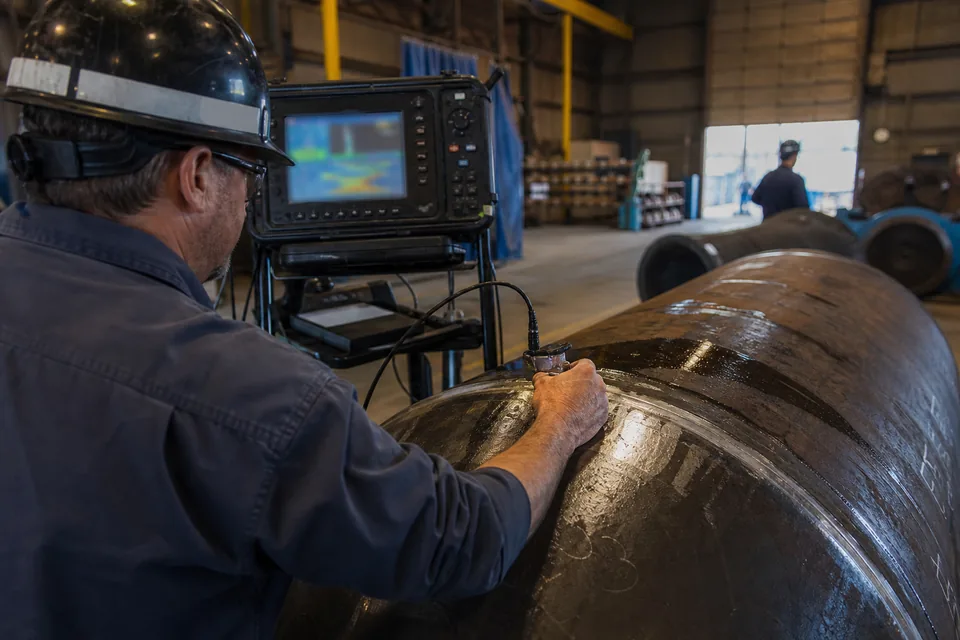
| UT thickness or EMAT, waterwall tubes | $1,500 to $15,000 | Tubes per day, tube numbering |
| MT of drum and header welds | $1,500 to $8,000 | Coating removal, acceptance code |
| PAUT or TOFD of thick drum seams | $1,500 to $6,000 per seam set | Report, raw data kept |
| Borescope of headers and drums | $600 to $3,500 | Access ports, video files |
| Infrared survey of casing and refractory | $500 to $1,800 | Online or offline |
| Mobilization and travel | $500 to $3,000 per trip | Remote site, per diem |
For which method finds which damage, see our boiler inspection services page.
What drives boiler inspection cost
- Tube count and access. Thousands of waterwall tubes behind scaffolding take days. The same crew on a small fire tube unit finishes in hours.
- Method. EMAT scans faster than a manual UT grid on clean tubes but costs more per day. PAUT on thick drum seams costs more than MT on the same weld.
- Cleaning. Loose scale, soot and refractory must be removed before testing. Grit blasting or water washing is billed by whoever does it.
- Scaffolding and confined space entry. Permits, an attendant and a rescue plan add hours to every shift.
- Outage timing. Night shifts, weekends and rush reports add premiums, and a tube leak call out costs more than a planned campaign.
- Reporting. Thickness maps per tube with corrosion rates cost more than a pass or fail letter, and are worth more next year when you compare scans.
Illustrative budgets with the scope added up
These are planning illustrations, not offers.
- Package fire tube boiler at a food plant, annual outage. UT on shell and head welds, MT on nozzles, borescope of the furnace. Roughly $2,000 to $4,500 plus cleaning.
- Water tube boiler at a hospital campus, 600 waterwall tubes. UT thickness grid at three levels, drum MT, written report. Roughly $5,000 to $12,000.
- Biomass boiler with severe fireside corrosion. EMAT scan of waterwalls and superheater, drum PAUT, mapped report. Roughly $15,000 to $40,000 over a one week outage.
- Single tube failure call out. One crew, one day, UT on neighbouring tubes and a weld MT. Roughly $1,500 to $3,500 including rush.
How to lower boiler inspection cost without cutting coverage
Bundle all boilers on one site into one mobilization and let the crew work in the order the units come offline. Scope to the previous report: repeat the grid points that showed loss last time and widen only where the trend is bad. Strip and clean the furnace with your own crew when the contractor rate for it is high. Ask for per tube numbering that survives next year, so you pay for trends instead of a new baseline. Plants that track outage vendors and sites across many locations can keep that in one place with a monitoring tool such as Eyeout, which also helps you notice reviews and mentions of the inspection companies you shortlist. Compare any NDT quote with a cheaper method for the same question, for example ultrasonic testing against a full PAUT scan, and see the typical pressure vessel inspection cost for the vessels on the same plant.
Rules that set the minimum scope
Power boilers follow ASME Section I and heating boilers Section IV, and in service inspection and repair follow the National Board Inspection Code published by the National Board of Boiler and Pressure Vessel Inspectors. Most states require an annual certificate inspection of power boilers, with intervals and exemptions that vary by jurisdiction, so confirm with your state boiler office. Technicians should hold ASNT SNT-TC-1A or CP-189 Level II certification in the methods quoted, see ASNT.
What to send for comparable boiler inspection quotes
- Site, number of boilers and a data sheet for each: type, design pressure, steam output, fuel, year built, tube material.
- Scope per boiler: waterwall, superheater, economizer, drums, headers, feed piping.
- Code and insurer requirements, and the date and findings of the last inspection.
- Access: who supplies scaffolding, cleaning, power and lighting.
- Deliverables: thickness maps per tube, weld images, replacement list, spreadsheet.
- Outage window, shifts and permit rules.
- A price per day, the minimum charge and a not to exceed total written out.
How much does a boiler inspection cost?
A statutory certificate inspection typically costs $100 to $600 per boiler. The NDT work behind it usually costs $1,500 to $8,000 for a package boiler and $10,000 to $60,000 for a utility scale unit, before cleaning and scaffolding.
How much does a boiler tube inspection cost?
UT thickness or EMAT scanning of waterwall tubes typically costs $1,500 to $15,000 per boiler depending on tube count and access. Superheater and economizer tubes add $1,000 to $20,000 depending on how many are checked.
Who pays for a boiler inspection?
The boiler owner pays. Insurers often include the certificate inspection in the premium, but NDT, cleaning, scaffolding and downtime are billed to the plant. Get these as separate lines so quotes compare.
How often does a boiler need inspection?
Most US states require a certificate inspection of power boilers every year and low pressure heating boilers every one to two years. NDT frequency depends on corrosion rate, age and what the last report found.
Why do two boiler inspection quotes differ so much?
Quotes differ because scope, access and reporting differ. One may price a sample of tubes, another a full grid, and one may leave cleaning and scaffolding out. Ask each company to list inclusions separately.