Typical wind turbine inspection prices by scope
Ranges for US inspection companies, for budgeting before you request quotes. Remote farms, short notice and winter work sit at the top of each band.
| Scope per turbine | Typical planning range | What to confirm in the quote |
|---|---|---|
| Drone blade survey, three blades | $400 to $1,200 | Photo resolution, defect register, turbines per day |
| Rope access blade inspection, three blades | $1,000 to $2,500 | Crew size, tap test included, repair of minor damage |
| Internal blade inspection | $1,500 to $4,000 | Crawl access, camera or thermography, confined space support |
| Gearbox borescope, campaign rate | $500 to $1,500 | Stages photographed, ports, oil handling |
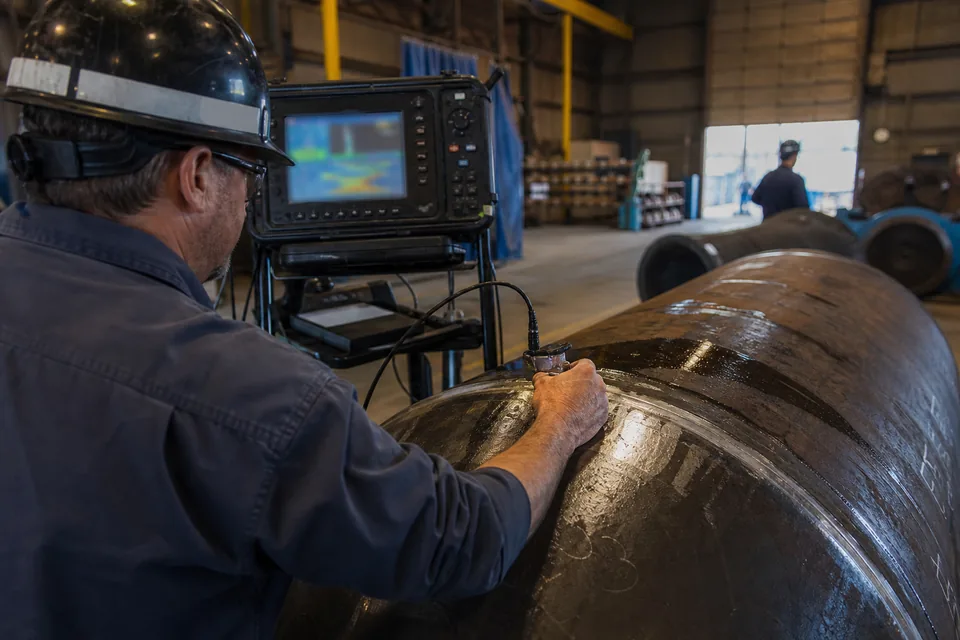
| Tower and flange weld UT or PAUT | $1,200 to $3,500 | Number of welds, lift or climb, report per weld |
| Bolt tension or torque checks | $800 to $2,500 | Percentage of bolts, ultrasonic or torque method |
| Infrared check of nacelle electrical | $400 to $1,200 | Load needed during the scan, report format |
| Mobilization and travel | $500 to $3,000 per trip | Mileage, hotel, per diem |
| Weather standby | 30 to 60 percent of the day rate | How wind limits are defined |
For method detail, see our wind turbine inspection services page. The wider NDT inspection cost guide compares how crews price other methods.
What drives wind turbine inspection pricing
- Turbine count. Mobilization is the same for 4 turbines and 40. A campaign spreads travel, safety induction and setup across the farm, and crews move faster once they know the layout.
- Blade length and turbine size. Longer blades take more drone passes and more rope access time. Hub height changes lift and climb time for tower work.
- Wind and season. Drones typically fly in winds below about 25 mph and climbers stop at lower limits. Winter days are shorter and more of them are lost.
- Depth of the report. Geotagged photos in a folder cost far less than a defect register with a severity score, a location along the blade and a repair recommendation.
- Who does the work. Crews with GWO training, a drone authorization and NDT qualifications charge more than a general drone pilot, and the report holds up with insurers and lenders.
- Access. Remote sites, cattle gates, snow roads and crane pad conditions add hours.
Illustrative budgets with the scope added up
These examples show how the pieces combine. They are planning illustrations, not offers.
- Drone survey of 20 turbines, three blades each, defect register and summary for the owner. Roughly $8,000 to $20,000 for the campaign, or $400 to $1,000 per turbine.
- One turbine after a lightning strike, rope access on all three blades plus a nacelle thermal check. Roughly $2,500 to $5,500 plus emergency mobilization.
- Pre acquisition baseline of a 30 turbine farm, drone blades on every turbine and borescope on a sample of ten gearboxes. Roughly $25,000 to $55,000 depending on travel and reporting.
- Warranty end inspection on 12 turbines, blades by drone and tower flange UT on every turbine. Roughly $20,000 to $50,000.
Campaign pricing against a single call out
A single call out pays full mobilization, usually $500 to $3,000, and often a minimum half day. A campaign shares it. If you can group turbines into one window and give the crew the layout, ask for a price per turbine with a not to exceed total. For emergency work after a strike or an alarm, expect the call out rate and a rush premium of 20 to 50 percent. Owners with a regular survey cycle often negotiate a framework rate across several years in return for volume.
Charges to settle before the crew arrives
- Weather standby, billed at a share of the day rate when wind stops work.
- Minimum charge, often a half or full day even for one turbine.
- Safety training, site induction and rescue standby time.
- Reflight or return visit if photos are blurred or a turbine was not stopped.
- Extra reporting, for example a lender format or a warranty claim package.
- Storage and transfer of large image sets, and who owns them.
How to lower wind turbine inspection cost without losing data
Group turbines into one window and give the contractor the layout, the OEM damage scale and the report format you want before they quote. Use a drone to screen the whole farm and send rope access only to the blades with findings. Time the work with scheduled service or low wind seasons so the crew does not stand by. Ask the contractor for the images in their original resolution so you can reuse them next year for comparison and spot growing damage early. Sites that also need roads, pads or boundaries checked can add a land surveyor quote to the same mobilization window.
What to send for comparable wind turbine inspection quotes
- Site, number of turbines, make, model, hub height and blade length.
- Scope per turbine and any sample based plan, such as ten gearboxes out of thirty.
- Damage scale or acceptance criteria the report must follow.
- Deliverables, such as geotagged photos, a defect register and a lender summary.
- Preferred window, season and whether turbines can be stopped.
- Safety training required and insurance limits.
- Request for a price per turbine and a not to exceed total, with the weather standby rule written out.
How much does a wind turbine inspection cost?
A wind turbine inspection in the US usually costs $400 to $1,200 per turbine for a drone blade survey and $1,000 to $2,500 for rope access. A gearbox borescope runs $500 to $1,500 in a campaign, and tower weld testing $1,200 to $3,500. A full scope on one turbine can reach $4,000 to $9,000.
How much does a wind turbine blade inspection cost?
A drone blade inspection costs about $400 to $1,200 per turbine, and rope access about $1,000 to $2,500. Prices drop in a farm wide campaign and rise with long blades, poor weather windows and detailed reports. Emergency work after lightning is billed at a call out rate.
How long does a wind turbine inspection take?
A drone crew usually covers three to eight turbines a day when wind allows. Rope access takes half a day to a full day per turbine. A gearbox borescope takes two to four hours per turbine. Reports arrive in three to ten business days, and urgent findings are called in sooner.
Is a drone inspection cheaper than rope access?
Yes, usually by half or more per turbine, and it needs no climbing. A drone finds surface damage well but cannot tap test a bond line or measure crack depth. Many owners screen by drone and use rope access only on the blades with findings.