Structural steel inspection for AISC 360 special inspections and welds
Structural steel inspection on a US building project means the special inspections that IBC Chapter 17 and AISC 360 Chapter N require: visual weld inspection by a CWI, ultrasonic testing of complete joint penetration welds, high strength bolting checks and verification of the details on the approved drawings. Special inspectors typically bill $75 to $125 per hour for a CWI and $90 to $150 per hour for a UT technician, with 2 to 4 hour minimums per visit. Describe the project once and the request goes to inspection agencies that cover your state and hold the certifications your building department accepts.
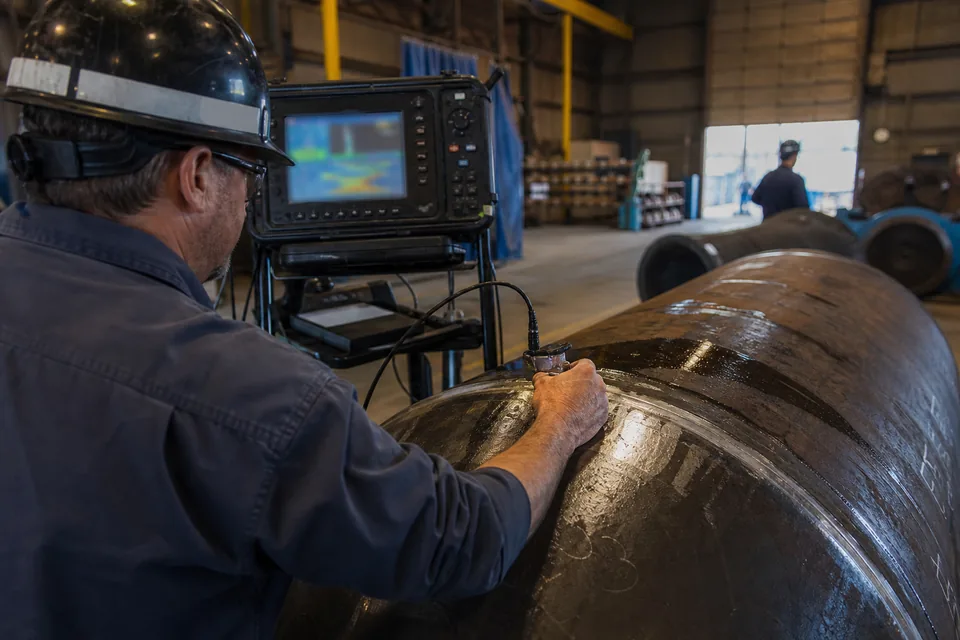
What a structural steel inspection covers and what it costs
| Task | Who performs it | What it checks | Typical US range |
|---|---|---|---|
| Visual weld inspection, field and shop | AWS CWI or ICC Structural Welding Special Inspector | Fit up, preheat, WPS compliance, weld size, profile, undercut, porosity | $75 to $125 per hour |
| Ultrasonic testing of CJP groove welds | UT Level II under ASNT SNT-TC-1A | Lack of fusion, slag, cracks inside the weld volume, per AWS D1.1 Clause 8 | $90 to $150 per hour, or $25 to $80 per weld |
| Magnetic particle testing of fillet and PJP welds | MT Level II | Surface and near surface cracks at weld toes and access holes | $85 to $130 per hour |
| High strength bolting inspection | ICC Structural Steel and Bolting Special Inspector | Pretension method, snug tight versus pretensioned joints, turn of nut or DTI checks | $75 to $120 per hour |
| Steel deck and stud welding | Special inspector | Puddle and fillet weld spacing, stud bend tests, side lap fasteners | $75 to $115 per hour |
| Final report and daily reports to the building official | Inspection agency | Signed daily logs, nonconformance list, final letter | Usually included, or $150 to $500 per project |
These are planning ranges, not quotes. Mileage, overtime, Saturday work and the minimum charge per trip often move the bill more than the hourly rate. A public example: the Utah Division of Facilities Construction and Management lists its contracted special inspection rates, including CWI time, in its code special inspections rate schedule.
Why the building official asks for structural steel special inspections
IBC Section 1705.2 makes special inspection of structural steel part of the permit, and the statement of special inspections from the engineer of record lists every task, its frequency (observe or perform) and who does it. AISC 360 Chapter N splits the work into quality control by the fabricator and erector, and quality assurance by the owner's inspector. The building official will not sign off the frame without the final special inspection letter, so a missing CWI report on one moment connection can hold up a certificate of occupancy. The code text is in IBC Chapter 17.
Who buys structural steel inspection services
General contractors and owners hire the special inspection agency named in the statement of special inspections, because the owner or the owner's agent has to employ the inspector, not the steel contractor. Steel fabricators that are not AISC certified buy shop inspections so their welds are accepted without a second check in the field. Erectors buy third party CWI visits to close out punch lists before the quality assurance agency arrives. Developers on Risk Category III and IV buildings, such as schools, hospitals and assembly halls, buy the heavier UT scope that the code requires for those structures.
How much UT your project needs on CJP welds
AISC 360 Section N5.5 sets the ultrasonic scope for complete joint penetration groove welds in butt, T and corner joints in material 5/16 inch thick or more. On Risk Category III and IV structures the quality assurance inspector tests all of those welds. On Risk Category II the rate is 10 percent, and it can rise when rejections run high or fall when they stay low. Seismic force resisting systems add AISC 341 and AWS D1.8 demand critical weld requirements. If you need a separate quote for the UT work alone, see ultrasonic testing services, and for pipe racks and process steel welded to the same code, pipe weld testing.
How a structural steel inspection job runs
- You send the statement of special inspections, the structural drawings, the welding procedure specifications and the schedule for shop and field work.
- The agency assigns a CWI and, where needed, a UT and bolting inspector, and agrees call out rules (24 hour notice is common).
- Inspectors visit at the frequencies in the statement: continuous for CJP welds in many specs, periodic for fillet welds and decking.
- Each visit ends with a daily report. Nonconforming welds go on a deficiency log with photos and the location on the drawing.
- Repairs are reinspected, and the agency issues a final letter to the building official once every item is closed.
What drives the price of structural steel special inspection
- Continuous versus periodic tasks. A continuous CJP weld inspection keeps an inspector on site all shift, which is where most budgets go.
- Risk Category. Moving from Category II to III raises UT from a 10 percent sample to every CJP weld.
- Trip minimums. A two hour minimum on a 30 minute bolt check is common, so grouping work into planned visits saves money.
- Shop location. An out of state fabricator means travel, per diem and sometimes a second inspector.
- Rejection rate. Failed welds create repair and reinspection visits, which are usually billable to the steel contractor.
- Reporting. Some agencies bill daily reports and the final letter separately, so ask for it in the quote.
For a full worked budget on a two story steel frame, see our CWI inspection cost breakdown. The NDT inspection cost guide compares the method rates behind the UT and MT lines.
What to put in your structural steel inspection request for quote
- 01The statement of special inspections and the tasks marked observe or perform.
- 02Risk Category, seismic design category and whether there is a seismic force resisting system.
- 03Tonnage, number of moment and braced frame connections, and a count of CJP welds if known.
- 04Fabricator name, whether it is AISC certified, and the shop location.
- 05Bolting method: snug tight, pretensioned or slip critical, and the pretension method.
- 06Deck and stud welding scope.
- 07Schedule: start of erection, shifts, weekend work and notice period.
- 08Deliverables: daily reports, deficiency log and the final letter to the building official.
How to choose a structural steel special inspection agency
Confirm that your building department accepts the agency and the individual inspectors. Many jurisdictions require ICC Structural Welding (S2) or Structural Steel and Bolting (S1) certification on top of AWS CWI. Ask whether UT technicians are qualified to AWS D1.1 Clause 8 and how their written practice is documented. Check that the agency is independent of the fabricator and erector, since the code does not let the contractor's own quality control serve as the owner's quality assurance. Ask how quickly a reinspection can be scheduled, because waiting three days for a CWI to close a repair can stop the next lift.
FAQ
How much does a structural steel special inspection cost?
Most US agencies bill a CWI at $75 to $125 per hour and a UT technician at $90 to $150 per hour, with 2 to 4 hour minimums per visit. A two story steel frame with a few dozen moment connections often lands between $8,000 and $25,000, mainly driven by continuous CJP weld inspection.
Who pays for special inspections on a steel building?
The owner, or the owner's agent such as the general contractor, employs and pays the special inspector under IBC Section 1704.2. The steel fabricator or erector usually pays for repair and reinspection visits caused by rejected welds, which the contract should state clearly before work starts.
Do I need a CWI or an ICC certified special inspector?
It depends on the building department. AWS CWI is the national weld inspection credential, while many jurisdictions also require ICC Structural Welding or Structural Steel and Bolting certification for special inspectors. Ask the building official, then list the required credentials in your request for quote.
Is shop inspection required if the fabricator is AISC certified?
Usually not. IBC Section 1704.2.5 lets the building official waive shop special inspection when the fabricator is approved, and AISC certification is the common way to qualify. Field welding, bolting and erection still need special inspection under the statement of special inspections.
How much UT is required on CJP welds?
Under AISC 360 Section N5.5, CJP groove welds in material 5/16 inch or thicker get 100 percent UT on Risk Category III and IV buildings and 10 percent on Risk Category II. The rate can change with the rejection rate, and seismic systems add AWS D1.8 rules.
Get matched with structural steel inspection agencies
Describe the project in the inspection method advisor, with the Risk Category, tonnage, CJP weld count and schedule. It builds a complete request for quote and sends it to special inspection agencies and NDT companies that cover your state. You compare quotes on the same scope instead of repeating the project to each agency. Browse all methods on the NDT companies page.
- 01What needs inspecting
- ...
- 02Material
- ...
- 04Concern
- ...
Run a special inspection agency? List your company
Show your CWIs, ICC certified inspectors, UT technicians and the states you cover, and receive matched structural steel inspection RFQs. Learn more for providers.